* Igneous rock: Rocks formed from the cooling and solidification of molten rock (magma or lava).
* Extrusive: Indicates that the rock formed from lava that erupted onto the Earth's surface.
* Composition: Basalt is primarily composed of silica (SiO2), magnesium oxide (MgO), and iron oxide (FeO), making it a mafic rock (meaning it is relatively rich in magnesium and iron).
* Texture: Basalt often has a fine-grained texture due to its rapid cooling, making it difficult to see individual crystals. It can also exhibit a vesicular texture with gas bubbles trapped inside.
Properties and Significance:
* Dark color: Basalt typically has a dark gray to black color.
* High density: It is denser than other common igneous rocks like granite.
* Widely distributed: Basalt is found on all continents and on the ocean floor.
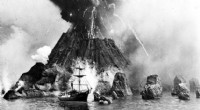
* Volcanic activity: Basalt is a key indicator of volcanic activity, both on land and underwater.
* Oceanic crust: Basalt forms the majority of the Earth's oceanic crust.
* Soil formation: Weathering of basalt can contribute to fertile soil formation.
Examples of Basalt:
* Hawaiian lava flows: The Hawaiian Islands are famous for their extensive basalt flows.
* Mid-ocean ridges: Basalt is the primary rock type found at mid-ocean ridges where new oceanic crust is formed.
* Flood basalts: Massive outpourings of basalt, covering large areas of land.
In summary, basalt is a common, dark-colored, extrusive igneous rock that plays a significant role in understanding Earth's geology and volcanic processes.