1. Weathering: This is the breakdown of existing rocks, minerals, and other materials at the Earth's surface. Weathering can be physical (like freezing/thawing or abrasion) or chemical (like dissolution or oxidation).
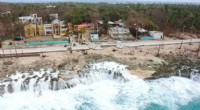
2. Erosion: This is the process of moving weathered material from its original location. Wind, water, ice, and gravity are the main agents of erosion.
3. Transportation: This refers to the movement of eroded material, often over long distances, by wind, water, or ice.
4. Deposition: As the energy of the transporting agent (wind, water, etc.) decreases, the eroded material settles out, or is deposited. This usually occurs in layers.
5. Burial and Compaction: As more sediment accumulates, the weight of the overlying material compresses the layers below, squeezing out water and air. This process compacts the sediment.
6. Cementation: Dissolved minerals in groundwater precipitate out between the sediment grains, acting like glue and binding the particles together. This process forms a solid rock.
Important Note: These processes don't always occur in a strict, linear order. There can be some overlap and feedback between them. For example, weathering can continue after deposition, and erosion can occur during transportation.