What happens:
1. Subduction: The denser oceanic plate dives beneath the less dense continental plate. This process, called subduction, is driven by the movement of Earth's tectonic plates.
2. Melting and Magma Generation: As the oceanic plate descends, it experiences increasing pressure and temperature. The heat from the Earth's mantle melts the subducting plate, creating magma.
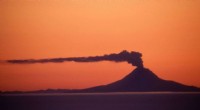
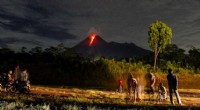
3. Volcanic Arcs: The magma, being less dense than the surrounding rock, rises to the surface, often erupting through the overlying continental plate. This creates a chain of volcanoes known as a volcanic arc, typically located a distance inland from the subduction zone. Examples include the Andes Mountains in South America and the Cascade Range in North America.
4. Earthquakes: The process of subduction is not smooth. The two plates grind against each other, causing stress and strain. This energy is released in the form of earthquakes, often of significant magnitude.
5. Trench Formation: At the point of subduction, the oceanic plate bends downward, forming a deep trench along the ocean floor. This trench is a characteristic feature of subduction zones.
6. Accretionary Prism: As the oceanic plate is dragged beneath the continental plate, sediments and rock fragments accumulate at the edge of the continent, forming an accretionary prism. These are often composed of deformed and metamorphosed rocks.
Why this happens:
* Plate Tectonics: Earth's lithosphere (crust and upper mantle) is broken into large plates that are constantly moving. These movements are driven by heat convection currents within the Earth's mantle.
* Density Difference: Oceanic crust is denser than continental crust because it is primarily composed of basalt, which is heavier than the granite that makes up the continents. This density difference is the main reason the oceanic plate subducts.
* Convective Forces: The heat from the Earth's core creates convection currents within the mantle. These currents drag the tectonic plates along, causing them to collide at convergent boundaries.
Examples:
* The Andes Mountains: Formed by the subduction of the Nazca Plate beneath the South American Plate.
* The Japanese Islands: A volcanic arc created by the subduction of the Pacific Plate beneath the Eurasian Plate.
* The Marianas Trench: The deepest part of the Earth's oceans, formed by the subduction of the Pacific Plate beneath the Philippine Plate.
Understanding the collision between oceanic and continental plates is crucial for understanding many aspects of Earth's geological history, present-day geological processes, and the risks associated with natural disasters such as earthquakes and volcanic eruptions.