Understanding the Rocks:
* Basalt: A dark, dense volcanic rock, typically found in oceanic crust. It's formed from cooled lava.
* Granite: A light-colored, coarse-grained rock, often found in continental crust. It's formed deep underground from slowly cooling magma.
Possible Scenarios:
1. Geological Processes:
* Plate Tectonics: The most likely scenario is that these rocks would be involved in a larger tectonic event. For example, oceanic basalt might be subducted under continental granite, leading to:
* Melting: The basalt, under pressure, would melt and rise to the surface as magma.
* Volcanoes: This magma could erupt, forming volcanoes.
* Metamorphism: Both rocks would be significantly altered by heat and pressure.
* Erosion: Over time, weathering and erosion could break down both basalt and granite into smaller pieces. These pieces might then be transported by wind or water and deposited elsewhere, potentially mixing together.
2. Direct Contact:
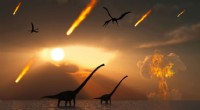
* Impact: If a large piece of basalt were to hit granite directly (e.g., a meteor impact), the immediate effect would be shattering and fracturing. The energy of the impact would create a crater and spread debris. However, this is a very unlikely scenario.
Key Points:
* Basalt and granite are not like billiard balls that simply collide.
* Their interaction is usually part of complex geological processes.
* The outcome depends on the specific scenario and the forces involved.
To summarize: The interaction between basalt and granite is more about how they react within a broader geological context rather than a direct collision.