1. Seismic Waves from Earthquakes:
* The foundation: The most significant source of information comes from studying seismic waves generated by earthquakes. These waves travel through Earth's interior, and their behavior is affected by the materials they pass through.
* How it works:
* P-waves (primary waves): These are compressional waves that travel through solids and liquids, similar to sound waves.
* S-waves (secondary waves): These are shear waves that can only travel through solids.
* What we learn: By analyzing the speed, direction, and changes in the waves as they travel, scientists can:
* Identify different layers: Sharp changes in wave speed indicate boundaries between different layers of the Earth.
* Determine composition: The speed of waves is influenced by the density and rigidity of materials, providing clues about the composition of each layer.
* Map the structure: The path of seismic waves reveals the size and shape of different layers, including the core and the mantle.
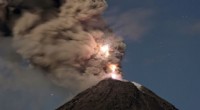
2. Volcanoes and Igneous Rocks:
* Bringing the inside out: Volcanoes erupt material from Earth's interior, providing samples of rocks from the mantle and even the deep crust.
* What we learn:
* Composition of deeper layers: Analyzing the chemical composition of volcanic rocks gives us insights into the types of minerals and elements present in the mantle.
* Evidence of processes: Volcanic eruptions also provide information about the processes happening deep inside the Earth, such as plate tectonics and magma formation.
3. Gravity and Magnetic Field:
* Gravitational pull: Variations in Earth's gravitational field are influenced by the density of materials beneath the surface. By measuring these variations, scientists can infer the density and composition of different layers.
* Magnetic field: Earth's magnetic field is generated by the movement of molten iron in the outer core. Studying the magnetic field and its fluctuations provides clues about the dynamics of the core.
4. Laboratory Experiments:
* Simulating conditions: Scientists conduct experiments in laboratories to recreate the high pressures and temperatures found deep inside Earth.
* Studying mineral behavior: By observing how minerals behave under these extreme conditions, scientists can learn about their properties and how they might be present in Earth's interior.
5. Meteorites:
* Ancient clues: Studying meteorites, especially iron meteorites, provides insights into the composition of the early Earth. They are thought to be remnants of the material that formed our planet.
Important Note: These techniques combined provide a robust understanding of Earth's interior, but it's important to remember that it's still a model, and further discoveries are constantly refining our knowledge.