1. Seismic Waves:
* Earthquakes and Explosions: When earthquakes or controlled explosions occur, they generate seismic waves that travel through the Earth. These waves behave differently depending on the density and composition of the material they pass through.
* Seismographs: Sensitive instruments called seismographs record the arrival times and characteristics of these waves at various locations on the Earth's surface.
* Analysis: By analyzing the patterns of seismic waves, scientists can infer the composition and physical properties of different layers. For example, the sudden change in wave speed at the core-mantle boundary helps determine the size and composition of the Earth's core.
2. Gravity Measurements:
* Earth's Gravitational Field: The Earth's gravitational field is not uniform. Variations in the gravitational field are influenced by the density of the underlying rocks.
* Satellite Data: Satellites equipped with gravity sensors measure these variations with high precision.
* Interpretation: Scientists can use these measurements to map out the distribution of different densities within the Earth, providing information about the composition and thickness of layers.
3. Magnetic Field Studies:
* Earth's Magnetic Field: The Earth's magnetic field is generated by the movement of molten iron in the outer core.
* Measurements: Magnetic field measurements are taken on the surface and from satellites.
* Understanding Core Dynamics: Analysis of magnetic field data provides insights into the composition, temperature, and movement of the Earth's core.
4. Volcanoes and Mantle Plumes:
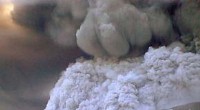
* Volcanic Eruptions: Volcanic eruptions bring up material from the Earth's mantle.
* Rock Analysis: Studying the composition of volcanic rocks provides clues about the composition of the mantle.
* Mantle Plumes: Giant upwellings of hot mantle material, called mantle plumes, can bring very deep material to the surface, offering insights into the deepest layers.
5. Meteorites:
* Extraterrestrial Clues: Meteorites are fragments of asteroids or other celestial bodies that have fallen to Earth.
* Early Earth Composition: Some meteorites are believed to have formed at the same time as the Earth and may provide insights into the composition of the early Earth.
6. Laboratory Experiments:
* High-Pressure and High-Temperature Experiments: Scientists recreate the extreme conditions found in the Earth's interior in laboratories using diamond anvil cells and other techniques.
* Mineral Behavior: By studying how minerals behave under such conditions, they can infer the composition and properties of the Earth's interior.
By combining these diverse methods, scientists are piecing together a comprehensive picture of the Earth's interior, even though they can't physically explore it.