1. Rotation:
* Centrifugal force: The Earth's rotation creates an outward force, causing the equator to bulge outward and the poles to flatten slightly. This is why the Earth is an oblate spheroid, slightly wider at the equator than at the poles.
2. Geological Processes:
* Tectonic plates: The Earth's crust is made up of large plates that are constantly moving, colliding, and pulling apart. This movement can cause changes in the Earth's shape over long periods.
* Volcanic eruptions: Large volcanic eruptions can cause the Earth's surface to bulge or deform slightly.
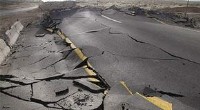
* Earthquakes: Earthquakes can cause localized changes in the Earth's shape, particularly near the epicenter.
3. Gravitational Forces:
* Sun and Moon: The gravitational pull of the Sun and Moon causes tides, which can slightly deform the Earth's shape. This effect is most pronounced in the oceans, but it also has a small effect on the solid Earth.
4. Climate Change:
* Ice melt: Melting glaciers and ice sheets can cause the Earth's surface to rebound, as the weight of the ice is removed. This can lead to slight changes in the Earth's shape over time.
* Sea level rise: As sea levels rise, the shape of the coastline changes, which is a change in the Earth's overall shape.
5. Human Activities:
* Groundwater extraction: Pumping large amounts of groundwater can cause the Earth's surface to sink, a phenomenon known as subsidence.
* Oil and gas extraction: Similar to groundwater extraction, removing large amounts of oil and gas from underground can cause the Earth's surface to sink.
Overall, the Earth's shape is constantly changing, but these changes are generally small and gradual. They happen over long periods, and they are often difficult to detect without sophisticated instruments.
It's important to note that the Earth's overall shape is quite stable. The changes we see are more like wrinkles on the surface of a large, stable sphere.