What are hotspots?
Hotspots are areas within the Earth's mantle where plumes of abnormally hot rock rise towards the surface. These plumes are stationary, meaning they don't move with the tectonic plates.
Crustal Movement at a Hotspot:
1. Plume Upwelling: The hot, buoyant plume rises from deep within the mantle, melting the overlying crust.
2. Magma Formation: The melted rock (magma) accumulates beneath the crust, creating a magma chamber.
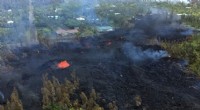
3. Volcanic Activity: Pressure from the magma forces its way through the crust, erupting on the surface as volcanoes.
4. Plate Movement: The tectonic plates, meanwhile, are constantly moving over the stationary hotspot.
5. Chain Formation: As the plate moves, the hotspot continues to create volcanoes. This results in a chain of volcanic islands or a line of volcanic mountains, with the youngest volcanoes located directly above the hotspot and the oldest at the trailing end of the chain.
Example: Hawaii
The Hawaiian Islands are a classic example of hotspot volcanism. The Pacific Plate moves over the Hawaiian hotspot, creating a chain of volcanic islands. The youngest volcano, Mauna Loa, is located directly over the hotspot, while the oldest volcano, Kauai, is located far to the northwest.
Key Points:
* Stationary Hotspot: The hotspot itself remains fixed while the plate moves.
* Volcanic Chains: Hotspot activity results in volcanic chains or lines of volcanic mountains.
* Age Progression: Volcanoes in a hotspot chain become older as you move away from the active center.
Let me know if you'd like a more detailed explanation of any specific aspect of hotspot movement!