* Fossils form in sedimentary rock: Fossils are most commonly found in sedimentary rocks, which are formed from the accumulation and compression of sediments.
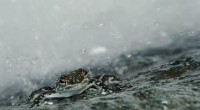
* Shallow seas are ideal for fossil formation: Shallow seas are ideal environments for fossil formation because:
* Abundant life: Shallow seas support a diverse range of marine life, providing plenty of organisms to fossilize.
* Sediment deposition: Sediments from rivers and other sources constantly settle to the seafloor, burying and preserving dead organisms.
* Low oxygen: The bottom of shallow seas can have low oxygen levels, slowing down decomposition and allowing for better preservation.
Let's consider the other options:
* Eroding hillsides: While eroding hillsides might expose some fossils, they are more likely to be fragmented and less well-preserved due to weathering.
* Deserts: Deserts can have fossils, but they are often exposed and subject to erosion, making them less likely to be well-preserved.
* Polar ice caps: While some ancient organisms might be trapped in ice, the extreme cold and pressure often destroy delicate structures, making fossilization less likely.
Therefore, the bed of a former shallow sea is the most likely location to find rich fossil deposits.