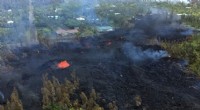
* Volcanic Environments: Volcanoes provide the ideal conditions for large crystal formation:
* Magma Chambers: Magma, molten rock, resides in these underground chambers, often at very high temperatures and pressures.
* Slow Cooling: The magma cools slowly over long periods, which is crucial for crystal growth.
* Mineral Rich: The magma is rich in various minerals, providing the building blocks for crystals.
* Crystal Growth: As the magma cools:
* Nucleation: Tiny seed crystals form.
* Diffusion: Atoms from the magma migrate towards these seeds.
* Crystal Growth: The atoms attach to the crystal seeds, causing them to grow larger over time.
* Location: Large crystals can form:
* Within the magma chamber: The most common location.
* In volcanic intrusions: When magma pushes into surrounding rock, forming veins and dikes.
Examples of Big Crystals from Volcanic Environments:
* Giant Gypsum Crystals: Found in Naica Mine, Mexico, these crystals can be 36 feet long.
* Selenite Crystals: Found in various locations, including the Cave of the Crystals in Mexico.
* Quartz Crystals: Large quartz crystals are often found in pegmatites, which are igneous intrusions rich in silica.
Important Note:
While volcanoes provide the conditions for large crystal formation, they are not the only source. Crystal growth can also occur in other geological settings, such as hydrothermal vents and metamorphic environments.