Here's why:
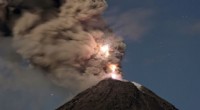
* Hotspots: These are areas where plumes of unusually hot mantle material rise up from deep within the Earth. This hot material melts the overlying crust, creating large amounts of magma that erupt to form massive volcanoes. Examples include the Hawaiian Islands and Yellowstone National Park.
* Tectonic Spreading Centers: These are areas where tectonic plates are pulling apart. Magma rises from the mantle to fill the gap, creating new oceanic crust and underwater volcanoes. While these volcanoes are numerous, they tend to be smaller and less massive than those formed by hotspots.
* Oceanic Transform Faults: These are areas where tectonic plates are sliding past each other horizontally. While earthquakes are common here, volcanic activity is relatively rare.
In summary: While spreading centers and transform faults have volcanic activity, hotspots provide the ideal conditions for the formation of the largest volcanoes due to the consistent supply of large amounts of magma from deep within the Earth.