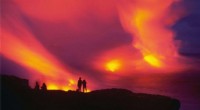
1. Active: This stage is characterized by ongoing or recent volcanic activity. This includes:
* Eruptions: Lava flows, ash plumes, gas releases, and pyroclastic flows.
* Seismic activity: Earthquakes and tremors associated with magma movement.
* Ground deformation: Swelling or tilting of the ground due to magma pressure.
2. Dormant: A volcano in this stage is considered inactive but with the potential to erupt again. This means:
* No recent eruptions: There has been no volcanic activity for a significant period.
* Potential for reactivation: The volcano still contains magma and has the potential to become active again.
* Signs of past activity: The volcano may show signs of past eruptions, such as craters, lava flows, or ash deposits.
3. Extinct: A volcano in this stage is considered unlikely to erupt again. This means:
* No activity for a very long time: The volcano has been inactive for thousands or even millions of years.
* No magma supply: The volcano's magma chamber is believed to be empty or solidified.
* Erosion and weathering: The volcano may be heavily eroded and weathered, with little evidence of its volcanic past.
It's important to note that the classification of a volcano's stage can be complex and subjective. Volcanoes can shift between these stages over time, and there are sometimes disagreements among experts about the current state of a particular volcano.