Active:
* Active: A volcano that has erupted in the last 10,000 years or is currently erupting. This is the most straightforward classification, but it doesn't tell us much about the volcano's current state.
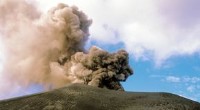
* Erupting: A volcano currently experiencing an eruption, meaning it's actively releasing magma, ash, or gas.
* Dormant: A volcano that has not erupted recently but is expected to erupt again in the future. This category is based on geological evidence suggesting the volcano has the potential for future eruptions.
* Resting: A volcano that is currently quiet but has erupted in the past and could potentially erupt again. It's essentially a more "active" version of dormant.
Inactive:
* Extinct: A volcano that is unlikely to erupt again. This classification is made based on the volcano's age, erosion, and lack of any signs of recent activity. However, it's important to note that even extinct volcanoes can sometimes show unexpected signs of reactivation.
Other Terms:
* Fumarolic: A volcano emitting gases like steam, sulfur dioxide, or carbon dioxide without an eruption.
* Phreatic: An eruption driven by the interaction of magma and water, often resulting in explosive steam blasts.
* Strombolian: Characterized by frequent, relatively small explosions of lava fragments.
* Vulcanian: Involves more violent explosions than Strombolian, often producing ash plumes and pyroclastic flows.
* Plinian: The most powerful type of eruption, with colossal ash plumes and explosive pyroclastic flows.
Important Note:
It's crucial to remember that these classifications are based on observations and predictions. Volcanoes are complex systems, and their behavior can be unpredictable. A volcano classified as extinct might unexpectedly erupt again, and a dormant volcano might remain quiet for centuries before showing signs of activity.