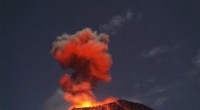
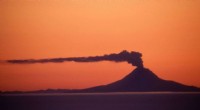
* Earth's Crust is Diverse: The Earth's crust is incredibly diverse, with different rock types dominating different regions. For instance, areas with active volcanoes will have a high proportion of igneous rocks, while areas with extensive sedimentary basins will have a high percentage of sedimentary rocks.
* Constant Rock Cycle: The rock cycle continuously transforms rocks from one type to another. A sedimentary rock can be buried, heated, and pressured to become metamorphic, which can then melt and recrystallize into igneous rock, and so on.
* Accessibility: We have much better access to the Earth's surface than its deeper layers. Our estimates of rock proportions are heavily influenced by what we can observe and study.
Instead of exact percentages, here's a general understanding:
* Igneous Rocks: These are the most abundant rock type in the Earth's crust overall. They are formed from cooled and solidified magma or lava.
* Metamorphic Rocks: Metamorphic rocks are formed by the transformation of existing igneous, sedimentary, or other metamorphic rocks due to heat, pressure, and chemical activity. They are also quite common in the Earth's crust.
* Sedimentary Rocks: While sedimentary rocks are only a small percentage of the Earth's crust by volume, they are incredibly important for various reasons, including their potential to contain fossils and hydrocarbons.
In summary:
* It's difficult to give specific percentages for the relative abundance of rock types globally.
* The Earth's rock composition is diverse and constantly changing due to the rock cycle.
* The proportions of each rock type vary greatly based on location and geological history.