Key Characteristics:
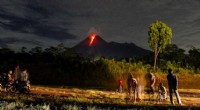
* Explosive: Cinder cones erupt violently, but typically on a smaller scale than other volcanic types.
* Basaltic Lava: They usually erupt basalt, a fluid type of lava.
* Short-Lived: The eruptions are often short-lived, lasting from days to weeks.
* Pyroclastic Material: The most common eruptive product is tephra, which includes:
* Cinders: Small, solidified fragments of lava.
* Scoria: Larger, more vesicular (gas-filled) fragments of lava.
* Ash: Very fine, powdery particles of volcanic rock and glass.
* Conical Shape: These eruptions build the characteristic cone shape by piling up ejected material around the vent.
Examples:
* Paricutin Volcano in Mexico: Famous for its sudden appearance and explosive eruption in 1943.
* Sunset Crater Volcano in Arizona: Another example of a cinder cone with a notable eruption history.
Important Note: While cinder cones are known for their relatively small eruptions, they can still pose hazards. The ejected tephra can travel significant distances and cause damage.