Composite Cones (Stratovolcanoes)
* Formation: Formed by alternating layers of lava flows and pyroclastic material (ash, cinders, and volcanic bombs) ejected from the volcano's vent during eruptions.
* Location: Typically found at convergent plate boundaries where one tectonic plate subducts beneath another.
* Magma Source: Magma originates from the melting of the subducting plate, resulting in viscous, silica-rich magma.
* Eruptions: Eruptions are often explosive due to the high viscosity of the magma and the build-up of pressure.
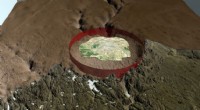
* Shape: Conical, steep-sided with a summit crater.
* Examples: Mount Fuji, Mount Vesuvius, Mount St. Helens.
Hotspot Volcanoes
* Formation: Formed by plumes of unusually hot mantle rock rising from deep within the Earth's mantle. These plumes melt the overlying crust, creating magma that erupts at the surface.
* Location: Can occur anywhere in the Earth's crust, regardless of plate boundaries.
* Magma Source: Magma originates from the mantle plumes, resulting in less viscous, basaltic magma.
* Eruptions: Eruptions are often effusive, characterized by slow-moving lava flows.
* Shape: Can range from shield volcanoes (broad, gently sloping) to composite cones (steep-sided) depending on the viscosity of the magma.
* Examples: Hawaiian Islands, Yellowstone National Park.
Key Differences:
* Plate Tectonics: Composite cones form at convergent plate boundaries, while hotspot volcanoes form regardless of plate boundaries.
* Magma Source: Composite cones have magma from melting subducting plates, while hotspot volcanoes have magma from mantle plumes.
* Magma Viscosity: Composite cone magma is more viscous than hotspot volcano magma.
* Eruption Style: Composite cone eruptions are often explosive, while hotspot volcano eruptions are typically effusive.
* Shape: Composite cones have a distinct conical shape, while hotspot volcanoes can have various shapes.
In summary: Both composite cones and hotspot volcanoes are volcanic structures, but their formation, location, magma sources, and eruption styles differ significantly due to their underlying tectonic processes.