While both land and ocean volcanoes are formed by the same basic process - magma rising to the surface - they exhibit significant differences due to their unique environments.
Location and Formation:
* Land volcanoes: These are formed when tectonic plates collide and one slides beneath the other (subduction). This melts the rock above, forming magma that rises to the surface. They can also occur at hotspots, where plumes of hot mantle material rise from deep within the Earth.
* Ocean volcanoes: These are most commonly found at mid-ocean ridges, where tectonic plates pull apart. This allows magma to rise and create new oceanic crust. They can also form at subduction zones and hotspots, similar to land volcanoes.
Type of Volcano:
* Land volcanoes: A variety of volcano types exist, including stratovolcanoes (cone-shaped, with steep slopes), shield volcanoes (broad, gently sloping), and cinder cones (small, steep-sided cones).
* Ocean volcanoes: The majority are submarine volcanoes, which erupt beneath the ocean surface. These can be classified into several types, including:
* Seamounts: Isolated mountains that rise from the seafloor but don't reach the surface.
* Guyots: Flat-topped seamounts that were once above sea level but have been eroded by waves.
* Mid-ocean ridges: Volcanoes that form along the boundaries where tectonic plates are pulling apart.
* Island volcanoes: These are volcanoes that have erupted above the ocean surface, forming islands.
Eruption Style:
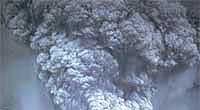
* Land volcanoes: Eruptions can be explosive, effusive, or a combination of both. Explosive eruptions are characterized by the rapid release of gas and ash, while effusive eruptions involve the slow flow of lava.
* Ocean volcanoes: Submarine eruptions often release large amounts of dissolved gas and hydrothermal fluids, creating plumes that can reach the ocean surface. These eruptions are generally less explosive than those on land due to the pressure of the water.
Impact on the Environment:
* Land volcanoes: Eruptions can have devastating effects on nearby communities, including destruction of property, loss of life, and disruption of air travel. They can also impact the environment through ashfall, gas emissions, and changes in landforms.
* Ocean volcanoes: Submarine eruptions contribute to the creation of new seafloor and can influence ocean currents and ecosystems. They also release dissolved chemicals into the water, which can affect marine life.
Other Key Differences:
* Erosion: Land volcanoes are subject to weathering and erosion by wind, rain, and ice. Ocean volcanoes, especially those below sea level, are less affected by these forces.
* Visibility: Land volcanoes are readily visible, while submarine volcanoes are often hidden beneath the ocean surface.
* Study and Monitoring: Land volcanoes are more easily studied and monitored than submarine volcanoes.
In summary:
While both types of volcanoes share fundamental characteristics, they differ significantly in their formation, morphology, eruption styles, environmental impact, and how they are studied and monitored. Understanding these differences is crucial for understanding the complex interplay between volcanoes and the Earth's dynamic systems.