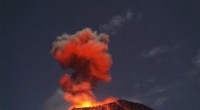
* Magma: Molten rock found beneath the Earth's surface.
* Solidification: As magma cools, its temperature drops, causing the atoms within the molten rock to slow down and bond together.
* Crystallization: The process of atoms forming a regular, repeating structure (a crystal) as the magma cools.
* Igneous Rocks: The solid rocks formed by the crystallization of magma or lava.
Here's how it works in more detail:
1. Magma Generation: Magma is created deep within the Earth by the melting of existing rocks due to various factors like heat from the Earth's core, pressure changes, or the presence of water.
2. Intrusive vs. Extrusive Cooling: Magma can cool in two ways:
* Intrusive: Magma cools slowly beneath the Earth's surface, allowing large crystals to form. This results in intrusive igneous rocks like granite.
* Extrusive: Magma erupts onto the Earth's surface as lava, cooling quickly. This results in smaller crystals or even glassy textures, forming extrusive igneous rocks like basalt.
Examples of igneous rocks:
* Granite: Intrusive igneous rock with large crystals, commonly used in construction.
* Basalt: Extrusive igneous rock with small crystals, found in oceanic crust and volcanic flows.
* Obsidian: Extrusive igneous rock that cools so quickly it forms a glassy texture.
The rock cycle is a continuous process, and igneous rocks can be further transformed into sedimentary or metamorphic rocks through weathering, erosion, deposition, and heat and pressure.