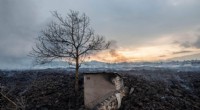
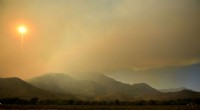
* Destruction and Ash: The heat and ash from a volcanic eruption destroy existing vegetation, including forests. The ash itself settles on the ground, creating a thick layer.
* Decomposition and Weathering: Over time, the ash and volcanic rock begin to decompose. Weathering processes (rain, wind, frost) break down these materials into smaller particles.
* Nutrient-Rich Soil: Volcanic ash is rich in minerals like potassium, phosphorus, and nitrogen, which are essential for plant growth. This makes the soil highly fertile.
* New Life: As the soil develops, new plant species begin to colonize the area. These pioneers can tolerate harsh conditions and help build up the soil further. Eventually, the area may be repopulated by forests, though the species composition might differ from the original one.
It's important to note that the process of soil formation after a volcanic eruption can take many years, even centuries. The timing depends on factors like the intensity of the eruption, climate, and the type of volcanic material deposited.