1. Explosive Eruptions:
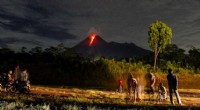
* High Viscosity: Silica-rich magmas are highly viscous, like thick honey. This viscosity traps gases, like water vapor and carbon dioxide, within the magma. As the magma rises, the pressure from these trapped gases increases.
* Violent Release: When the pressure overcomes the strength of the magma, the gases are released explosively, resulting in violent eruptions that can launch volcanic bombs, ash plumes, and pyroclastic flows.
* Examples: The eruption of Mount St. Helens in 1980, which was a highly explosive eruption, was caused by a magma with high silica content.
2. Pyroclastic Flows:
* Dense, Hot Flows: Silica-rich magmas can generate pyroclastic flows, which are fast-moving, extremely hot currents of gas, ash, and rock fragments.
* Destructive Force: These flows can travel at speeds of hundreds of kilometers per hour and can incinerate everything in their path.
* Example: The eruption of Mount Vesuvius in 79 AD produced pyroclastic flows that buried the Roman cities of Pompeii and Herculaneum.
3. Lahars:
* Mud Flows: Silica-rich magmas can generate lahars, which are mudflows caused by the mixing of volcanic ash with water.
* Significant Damage: Lahars can be very destructive, carrying large boulders and debris, and flooding valleys and settlements.
* Example: The eruption of Mount Pinatubo in 1991 generated lahars that caused significant damage to surrounding areas.
4. Acid Rain:
* Sulfur Dioxide Release: Eruptions of silica-rich magmas often release large amounts of sulfur dioxide into the atmosphere.
* Acidic Precipitation: When sulfur dioxide reacts with water vapor, it forms sulfuric acid, which falls to the ground as acid rain.
* Environmental Impact: Acid rain can damage ecosystems, crops, and buildings.
5. Long-Term Climate Impacts:
* Ash and Gases: The ash and gases released during explosive eruptions of silica-rich magmas can affect global climate patterns.
* Global Cooling: Volcanic ash can block sunlight, leading to short-term global cooling.
* Example: The eruption of Mount Tambora in 1815 caused the "Year Without a Summer" in 1816.
It's important to remember that the danger posed by magma with high silica content depends on several factors, including the amount of gas trapped within the magma, the eruption style, and the surrounding environment. However, the properties of silica-rich magmas make them inherently more prone to causing dangerous eruptions.