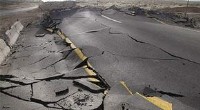
Here's why:
* Divergent Plate Boundaries: Ocean ridges are formed at divergent plate boundaries, where tectonic plates move apart.
* Tensional Stress: As plates move apart, the crust is stretched and pulled, creating tensional stress.
* Normal Faulting: This tensional stress leads to the formation of normal faults. In normal faulting, the hanging wall (the block of rock above the fault) moves downward relative to the footwall (the block of rock below the fault).
The process of normal faulting at ocean ridges leads to several key features:
* Formation of the Rift Valley: The downward movement of the hanging wall blocks creates a central valley along the ridge axis called the rift valley.
* Upwelling of Magma: As the plates separate, magma from the mantle rises up and cools, forming new oceanic crust.
* Seafloor Spreading: The creation of new oceanic crust pushes the existing crust away from the ridge axis, leading to seafloor spreading.
In summary: The combination of divergent plate motion, tensional stress, and normal faulting is responsible for the formation of ocean ridges and the continuous process of seafloor spreading.