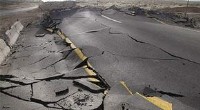
Seismic moment is a crucial parameter in earthquake science, providing a more accurate and robust measure of earthquake strength compared to traditional magnitude scales like the Richter scale. Here's a breakdown:
What is it?
Seismic moment (Mo) quantifies the total amount of energy released during an earthquake. It is calculated based on:
* Area of the fault rupture: The size of the fault surface that slipped during the earthquake.
* Average slip: The average distance the fault surfaces moved relative to each other.
* Shear modulus of the rocks: A measure of the rigidity of the rocks involved in the earthquake.
Why is it important?
* More precise than magnitude: Seismic moment is a more accurate measure of energy release than traditional magnitude scales because it accounts for the physical characteristics of the earthquake source.
* Directly related to energy release: Seismic moment is directly proportional to the amount of energy released during an earthquake, making it a valuable tool for understanding the destructive potential of an event.
* Independent of distance: Unlike magnitude scales, seismic moment is not affected by the distance from the earthquake epicenter to the measuring instrument.
* Useful for large earthquakes: Seismic moment is particularly useful for characterizing large earthquakes (magnitude 7 or above), where the traditional magnitude scale becomes less reliable.
How is it used?
* Estimating earthquake energy: Scientists use seismic moment to calculate the total energy released by an earthquake, which helps them understand the earthquake's potential for damage.
* Understanding fault behavior: Seismic moment provides insights into the behavior of faults and the processes that drive earthquakes.
* Improving seismic hazard assessments: By studying seismic moment, researchers can better predict the potential for future earthquakes and mitigate their impacts.
Units:
Seismic moment is typically measured in Newton-meters (Nm).
In Summary:
Seismic moment is a fundamental measure of earthquake strength that offers a more accurate and comprehensive understanding of the energy released during an earthquake compared to magnitude scales. It's a crucial tool for scientists and engineers working to assess earthquake hazards, understand fault behavior, and mitigate seismic risks.