Physical Features:
* Mountains: Mountain ranges act as formidable barriers, creating distinct climates and ecosystems on either side. The Himalayas between India and China, the Andes between Argentina and Chile, and the Pyrenees between France and Spain are prime examples.
* Rivers: Rivers can serve as natural borders, with their flow often defining the limits of a territory. The Rio Grande between the United States and Mexico, the Rhine River between France and Germany, and the Nile River in Egypt are notable examples.
* Oceans and Seas: Vast bodies of water like oceans and seas act as natural barriers, separating continents and islands. For instance, the Atlantic Ocean divides North America from Europe and Africa, while the Mediterranean Sea separates Europe from Africa.
* Deserts: Deserts, with their harsh and arid conditions, can effectively act as natural boundaries. The Sahara Desert in North Africa and the Arabian Desert in the Middle East are examples.
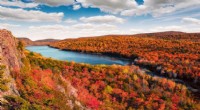
* Lakes: Large lakes can also function as natural borders, particularly when separating two countries or regions. Lake Superior between Canada and the United States, Lake Victoria in East Africa, and Lake Titicaca between Bolivia and Peru are examples.
* Forests: Extensive forests can act as natural barriers, particularly if they are dense and difficult to penetrate. The Amazon rainforest in South America and the Congo rainforest in Africa are prime examples.
Other Factors:
* Climate: Distinct climatic zones can create natural boundaries, with different regions having varying temperature, rainfall, and vegetation.
* Geological Features: Fault lines, canyons, and other geological formations can create natural barriers.
Advantages of Natural Boundaries:
* Natural Defenses: Natural boundaries provide a degree of natural defense against invasion or conflict.
* Clear Demarcation: They offer a clearly defined line of separation between territories.
* Environmental Protection: Natural boundaries can contribute to the preservation of unique ecosystems and habitats.
Disadvantages of Natural Boundaries:
* Unstable Features: Some natural boundaries, such as rivers, can change course or dry up, leading to boundary disputes.
* Limited Flexibility: They can limit the potential for expansion or cooperation between neighboring regions.
It's important to note that natural boundaries are not always perfect and can be subject to change over time. Additionally, political and historical factors often play a significant role in determining the final borders between countries or regions, even when natural features are present.