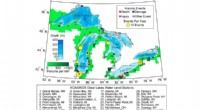
1. Geographical Coordinates:
* Latitude: This measures the distance north or south of the equator, expressed in degrees (ranging from 0° at the equator to 90° at the poles).
* Longitude: This measures the distance east or west of the Prime Meridian (which passes through Greenwich, England), also expressed in degrees (ranging from 0° to 180°).
Together, latitude and longitude form a unique coordinate pair that identifies any point on Earth.
2. Reference Systems:
* Datum: A mathematical model of the Earth, which allows us to translate coordinates into real-world distances and elevations.
* Projection: A method to transform the 3D curved surface of Earth into a 2D plane, which makes it easier to represent on maps and charts.
Examples of how these elements are used in various technologies:
* GPS (Global Positioning System): Uses a network of satellites orbiting Earth to determine latitude, longitude, and altitude.
* Maps: Employ various projections to display geographical information on a flat surface.
* GIS (Geographic Information Systems): Uses geographical coordinates and reference systems to store, analyze, and visualize spatial data.
Other factors:
* Address: While not a geographical coordinate, street addresses provide a more specific location within a city or town.
* Landmarks: Notable features on the landscape can also help identify locations.
In essence, by combining geographical coordinates and reference systems, we can precisely locate points on Earth's surface for navigation, mapping, and various other applications.