Here's a breakdown:
Topographic Maps:
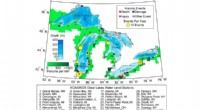
* Focus on elevation: They use contour lines to depict the shape and elevation of the land. Contour lines connect points of equal elevation, allowing you to visualize hills, valleys, and other landforms.
* Detailed land features: Topographic maps show a variety of features like rivers, lakes, roads, buildings, and vegetation, but they are primarily concerned with depicting terrain.
* Used for: Navigation, planning outdoor activities, geological studies, and construction projects.
Other Maps:
* Focus on various themes: These maps can be political (showing countries and cities), thematic (showing population density, climate, etc.), or road maps (showing roads and highways).
* Limited terrain information: Most other maps might show a simplified view of the land using symbols for mountains or water bodies, but they lack the detailed elevation information provided by contour lines.
In short:
* Topographic maps are like 3D representations of the land, showing elevation and shape in detail.
* Other maps focus on different themes and offer a less detailed view of terrain.
Think of it this way: If you were planning a hike, a topographic map would be essential to understand the terrain and elevation changes. However, if you were simply driving from point A to point B, a road map would be sufficient.