Similarities:
* Gas Release: Both involve the release of gases. In the baking soda volcano, the reaction between baking soda and vinegar produces carbon dioxide gas, causing the eruption. In real volcanoes, magma (molten rock) contains dissolved gases like water vapor, sulfur dioxide, and carbon dioxide. As the magma rises, the pressure decreases, causing the gases to expand and erupt.
* Explosive Force: The expanding gases in both scenarios create pressure that forces the eruption. The baking soda volcano eruption is mild, but real volcanoes can have devastating explosive power.
* Formation of a Cone: Over time, the ejected material from a real volcano can build up, forming a conical shape. Similarly, the baking soda volcano can create a small cone of baking soda and vinegar mixture.
Differences:
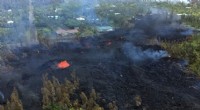
* Material Erupted: The baking soda volcano erupts a mixture of baking soda, vinegar, and possibly food coloring. Real volcanoes erupt molten rock (lava), ash, and gases.
* Scale: Real volcanoes are much larger and more powerful than a baking soda volcano. The eruption of a real volcano can have a significant impact on the surrounding environment.
* Cause of Eruption: The baking soda volcano eruption is triggered by a chemical reaction. Real volcanoes are fueled by the movement of tectonic plates and the heat within the Earth's mantle.
* Duration: The baking soda volcano eruption is short-lived, lasting only a few seconds. Real volcanoes can erupt for days, weeks, or even years.
In summary, the baking soda volcano experiment demonstrates the basic concept of gas pressure and how it can lead to an eruption. However, it's crucial to remember that it's a simplified model and doesn't represent the complex processes that occur in a real volcano.