Here's why:
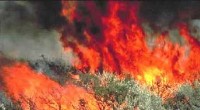
* Lava flows: Stratovolcanoes are known for their thick, viscous lava flows that build up steep, conical slopes. This lava, often andesitic or dacitic, cools and solidifies relatively quickly, contributing to the volcano's layered structure.
* Tephra: These volcanoes also experience explosive eruptions that eject a mixture of ash, cinders, and volcanic bombs (tephra). These materials fall back around the volcano, creating layers of pyroclastic debris that further add to the volcano's height and shape.
Examples of stratovolcanoes:
* Mount Fuji (Japan)
* Mount Vesuvius (Italy)
* Mount St. Helens (USA)
* Mount Kilimanjaro (Tanzania)
* Mount Etna (Italy)
These volcanoes are often characterized by their symmetrical, conical shape and steep slopes, resulting from the interplay of both effusive (lava) and explosive (tephra) eruptions.