Here's why it's considered the worst:
* Massive scale: The eruption ejected an estimated 39 cubic miles (160 cubic kilometers) of volcanic material, covering the island and surrounding areas in ash and pumice.
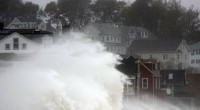
* Tsunami: The eruption triggered a massive tsunami that devastated the surrounding region, including the Minoan civilization on Crete, which was located about 70 miles (110 kilometers) south of Santorini.
* Climate change: The eruption released a vast amount of sulfur dioxide into the atmosphere, which likely caused significant global cooling and climatic changes.
* Destruction of the island: The eruption completely reshaped the island of Santorini, creating the caldera that is now a major tourist attraction.
The Minoan eruption had a devastating impact on the surrounding region and likely contributed to the decline of the Minoan civilization. It serves as a stark reminder of the destructive power of volcanoes and the potential for large eruptions to have global consequences.