1. Tectonic Plate Movement
The outermost layer of the Earth, known as the lithosphere, is made up of massive tectonic plates that float on the asthenosphere, a region of Earth's mantle characterized by semi-molten rock. These tectonic plates are in constant motion, driven by convection currents within the Earth's mantle. As they move, they interact with each other at their boundaries, giving rise to different geological features and shaping the Earth's surface.
a. Convergent Boundaries: When two plates converge or move towards each other, several scenarios can occur:
- Collision and Uplift: If two continental plates collide, they may stack up and create extensive mountain ranges like the Himalayas.
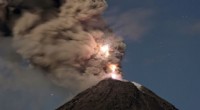
- Subduction: If one plate is oceanic and the other continental, the denser oceanic plate subducts beneath the continental plate, forming a subduction zone. This process can generate volcanoes, deep ocean trenches, and island arcs.
- Oceanic-Oceanic Subduction: When two oceanic plates collide, one usually subducts beneath the other. If the subducting plate contains buoyant material like seamounts, it may produce a chain of volcanic islands on the surface.
b. Divergent Boundaries: When two tectonic plates move away from each other, new crustal material is formed to fill the gap. This happens along mid-ocean ridges, such as the Mid-Atlantic Ridge, where magma rises from the Earth's mantle and solidifies as the plates spread. This process creates new ocean floor.
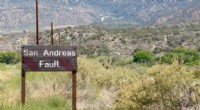
c. Transform Boundaries: These occur when two plates slide past each other horizontally. Transform boundaries are often marked by faults and can generate substantial earthquakes. The San Andreas Fault in California is a prominent example.
2. Crustal Deformation
The Earth's crust is not rigid and can undergo various forms of deformation over long periods. These processes can reshape the crust, altering the topography and surface features.
a. Folding: When tectonic compression occurs, the crust may buckle and fold, forming anticlines (upfolds) and synclines (downfolds). These folded structures can become prominent geological features over time.
b. Faulting: When tectonic forces exceed the strength of the crust, ruptures occur, resulting in faults. Vertical faulting can lead to the formation of mountains and valleys, while horizontal faulting can lead to the formation of rifts and grabens.
c. Isostasy: Isostasy refers to the balance of weight within the Earth's crust. When parts of the crust are loaded with excess mass, such as thick layers of sediment or ice caps, the underlying mantle tends to flow and uplift the area. Conversely, when the load is removed, the land may subside. This process can sculpt landscapes over long periods.
d. Erosion and Deposition: Erosion by water, wind, ice, and other agents wears down and transports material from one location to another. This material is deposited elsewhere, leading to the formation of new landforms and changes in the Earth's surface.