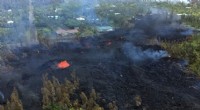
1. Water Vapour: Volcanic eruptions released large amounts of water vapour into the atmosphere, which eventually condensed to form clouds and rain, leading to the development of Earth's hydrological cycle and the formation of oceans and lakes.
2. Carbon Dioxide: Volcanoes emitted significant quantities of carbon dioxide (C02). This greenhouse gas trapped heat in the atmosphere creating a warm, early climate suitable for the development of life.
3. Nitrogen: Nitrogen was also released by volcanoes and became a dominant component of the early atmosphere. Nitrogen is crucial for many biological processes, including protein synthesis.
4. Sulfur Dioxide: Volcanic activity released sulfur dioxide (SO2), which combined with other atmospheric components to form sulfate aerosol. These aerosols created a haze that reflected sunlight and regulated Earth's early climate.
5. Ammonia and Methane: Volcanic eruptions also emitted ammonia (NH3) and methane (CH4), gases essential for the development of prebiotic chemistry. These gases participated in chemical reactions that eventually led to the emergence of complex organic molecules and eventually life.
6. Hydrogen Sulfide: Hydrogen sulfide (H2S) was another volcanic gas present in early atmosphere. It contributed to the reducing conditions necessary for the synthesis of organic compounds and the origin of life.
Over time, the volcanic gases released during numerous eruptions interacted with other atmospheric components, and the Earth's atmosphere evolved to become the oxygen-rich environment we have today. The release of volcanic gases was also influenced by the Earth's early geology, plate tectonics, and changing environmental conditions.