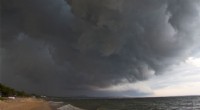
The angle of the incoming waves is determined by the direction of the wind that generated them. When the wind blows parallel to the coastline, the waves will come in at a right angle and there will be no longshore drift. When the wind blows at an angle to the coastline, the waves will come in at an angle and there will be longshore drift.
The speed of longshore drift is determined by the strength of the wind and the angle of the incoming waves. The stronger the wind, the faster the longshore drift. The greater the angle of the incoming waves, the faster the longshore drift.
Longshore drift can have a significant impact on the coastline. It can erode beaches, build up sandbars, and create new landforms. It can also transport sediment and nutrients, which can affect the marine environment.