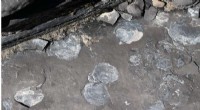
Clay minerals are essential to life, as they help maintain its structure and provide important nutrients. Clays are also rich in metal ions, which could have been used as catalysts in the early stages of life.
Micaceous clay minerals, such as montmorillonite, have a regular structure that could have provided a template for the formation of organic molecules. The surfaces of these minerals are also negatively charged, which would have attracted positively charged organic molecules.
In the presence of water, these organic molecules could have reacted with each other to form more complex molecules, eventually leading to the formation of living cells.
The micaceous clay hypothesis is supported by a number of experimental studies, which have shown that clay minerals can catalyze the formation of organic molecules and that these molecules can assemble into self-organized structures.
One of the most famous experiments supporting the micaceous clay hypothesis was conducted by Stanley Miller and Harold Urey in 1953. In this experiment, they simulated the conditions of the early Earth's atmosphere and ocean in a sealed glass flask. They then added a spark to the flask, which provided the energy necessary for chemical reactions to occur.
After a few days, they found that a variety of organic molecules had formed in the flask, including amino acids, which are the building blocks of proteins.
The micaceous clay hypothesis is still considered to be a viable explanation for the origin of life, and it continues to be studied by scientists today.