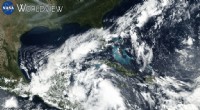
TRMM is a joint mission between NASA and the Japan Aerospace Exploration Agency (JAXA). The satellite carries two instruments that are particularly well-suited to rainfall measurements: the TRMM Microwave Imager (TMI) and the Precipitation Radar (PR). The TMI uses passive microwave technology to observe rainfall over large regions, while the PR uses active radar technology to study rainfall in narrow swaths. The combination of these two instruments allows TRMM to provide rainfall data with both wide coverage and high resolution.
The TRMM satellite observed exceptionally heavy rainfall in several areas affected by the El Niño storm. The heaviest rains fell in the San Francisco Bay Area and the Sierra Nevada mountains. San Francisco International Airport received 6 inches (15 centimeters) of rain on January 7, making it the wettest day in January in the city's history. The city of Santa Cruz received 10.5 inches (27 centimeters) of rain in the same 24-hour period, breaking the daily rainfall record for January.
The TRMM satellite also observed rainfall in other parts of the United States, including the Pacific Northwest, the Rockies, and the Great Plains. The rains were less heavy in these areas, but they still caused significant flooding and mudslides.
The El Niño storm that caused the heavy rainfall is a natural climate pattern that occurs every few years. El Niño is characterized by warmer-than-average sea surface temperatures in the Pacific Ocean, which can lead to changes in weather patterns around the world. The current El Niño is one of the strongest on record, and it is expected to last until the spring of 2017.
The heavy rains that have fallen in California and other parts of the United States are a reminder of the vulnerability of these regions to climate change. Climate change is expected to lead to more frequent and severe El Niño storms, which could have devastating consequences.