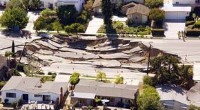
The deformation caused by an earthquake can be measured by a variety of techniques, including using seismometers (which record seismic waves), GPS (which measures the position of points on the Earth's surface), and InSAR (which uses radar to measure ground deformation).
One way that earthquakes can deform gravity is by changing the density of the rocks in the affected area. When rocks are fractured, their density decreases, which can cause the gravity field in the area to decrease as well. This can be measured using gravimeters, which measure the acceleration due to gravity.
Another way that earthquakes can deform gravity is by changing the shape of the Earth's surface. When the ground moves during an earthquake, it can cause the surface of the Earth to bulge or sink, which can change the gravity field in the area. This can be measured using gravity gradiometers, which measure the gradient of the gravity field.
The deformation of gravity by earthquakes can be used to study the structure and dynamics of the Earth's interior. By measuring the deformation caused by earthquakes, scientists can learn about the distribution of density within the Earth, the mechanisms of earthquake rupture, and the processes that drive earthquakes. This information can be used to better understand the hazards associated with earthquakes and to develop strategies to mitigate these hazards.