Here's a breakdown of how this works:
* Cellular respiration is a series of metabolic reactions that break down glucose in the presence of oxygen to release energy in the form of ATP (adenosine triphosphate). This process occurs in the cytoplasm and mitochondria of cells.
The process can be divided into four main stages:
1. Glycolysis: Glucose is broken down into pyruvate in the cytoplasm, producing a small amount of ATP.
2. Pyruvate oxidation: Pyruvate is converted into acetyl-CoA, which enters the mitochondria.
3. Citric Acid Cycle (Krebs Cycle): Acetyl-CoA is further oxidized, generating electron carriers (NADH and FADH2) and more ATP.
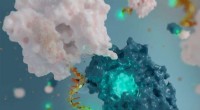
4. Electron Transport Chain: Electrons from NADH and FADH2 are passed along a series of protein complexes, driving the production of a large amount of ATP through oxidative phosphorylation.
This process is crucial for all living organisms, as it provides the energy needed for essential life functions such as growth, movement, and maintaining homeostasis.