By Isaiah David Updated Mar 24, 2022
When power enters a building, it arrives as AC, or "alternating current." AC alternates between positive and negative 60 times per second (60 Hz). It travels through the live conductor, and a return conductor completes the circuit.
Standard household AC is delivered at 120 V, which is too high for most DC devices. A step‑down transformer reduces this voltage. The transformer consists of two windings: a primary with many turns and a secondary with fewer turns. The changing magnetic field generated by the primary induces a lower‑voltage AC in the secondary.
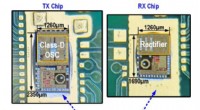
Direct current flows in a single direction. A DC power supply contains two leads—negative and positive. The core component that converts AC to DC is a rectifier, typically built from diodes. Diodes act as one‑way valves: during the negative half‑cycle, one diode conducts to the negative lead; during the positive half‑cycle, another diode conducts to the positive lead. Various rectifier configurations exist, but all rely on diodes to separate the negative and positive halves of the waveform.