For weather and climate:
* Satellites: They provide data on temperature, humidity, precipitation, wind speed, cloud cover, and many other atmospheric variables over vast areas.
* Weather stations: These are located around the world and provide ground-level measurements of various weather parameters.
* Buoys: These are deployed in oceans and lakes to measure water temperature, salinity, and wave height.
For geography and mapping:
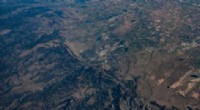
* Satellites: They capture high-resolution images of the Earth's surface, enabling mapping and monitoring of land cover, deforestation, urbanization, and other changes.
* GPS receivers: They use signals from orbiting satellites to determine precise locations on Earth, enabling global positioning and navigation.
For oceanography:
* Sonar systems: They emit sound waves and measure their reflections to map the ocean floor and identify marine life.
* Autonomous Underwater Vehicles (AUVs): These robotic submarines can collect data on water currents, salinity, temperature, and marine life.
For geology and seismology:
* Seismometers: They detect and measure ground vibrations caused by earthquakes, providing information about the Earth's interior and earthquake activity.
For astronomy:
* Telescopes: They collect light from distant objects in space, enabling astronomers to study stars, galaxies, and other celestial bodies.
* Radio telescopes: They receive radio waves emitted by celestial objects, providing information about the composition and evolution of the universe.
For environmental monitoring:
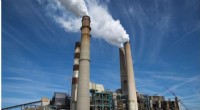
* Air quality sensors: These monitor pollutants in the air, providing data on air quality and potential health risks.
* Water quality sensors: They measure water quality parameters such as pH, dissolved oxygen, and nutrient levels, providing insights into water pollution and ecosystem health.
This is not an exhaustive list, but it gives you an idea of the diverse range of devices used for global measurements. The specific device used will depend on the type of measurement you are interested in.