Technology as a Tool:
* Observation and Data Collection: Technology provides the means to observe and collect data beyond human capabilities. Telescopes allow us to study distant stars, microscopes reveal the microscopic world, and satellites provide global data.
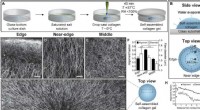
* Experimentation and Measurement: Scientific experiments rely on advanced equipment for precise measurements and manipulations. This includes lasers, spectrometers, particle accelerators, and even sophisticated computer simulations.
* Data Analysis and Interpretation: Technology allows us to process vast amounts of data, analyze trends, and draw conclusions that would be impossible manually. Powerful computers, software, and algorithms are crucial for this task.
* Communication and Collaboration: Technology enables scientists to communicate their findings, collaborate on research, and access resources globally. This includes online journals, databases, video conferencing, and collaborative platforms.
Technology as a Driver:
* New Research Avenues: Technological advancements often open up entirely new avenues for scientific investigation. For example, the development of CRISPR-Cas9 gene editing technology revolutionized genetic research, leading to breakthroughs in disease treatment.
* Pushing Boundaries: Technological innovations often push the boundaries of what we can study and understand. The invention of the electron microscope allowed us to visualize atoms, leading to new discoveries in materials science and chemistry.
* Solving Real-World Problems: Technology plays a crucial role in developing solutions to pressing issues like climate change, disease outbreaks, and food security. Scientists use technological tools to develop new energy sources, medical treatments, and sustainable agricultural practices.
Examples:
* The Hubble Space Telescope: This powerful telescope has revolutionized our understanding of the universe, capturing stunning images of distant galaxies and nebulae.
* The Human Genome Project: This project, enabled by technological advances in DNA sequencing, mapped the entire human genome, leading to breakthroughs in genetic medicine.
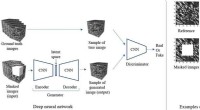
* Artificial Intelligence (AI): AI is transforming scientific research by automating tasks, analyzing complex datasets, and developing new theories.
In conclusion: Technology and science are deeply intertwined. Technology provides the tools that enable scientists to explore, experiment, and discover. In turn, scientific discoveries often drive the development of new technologies, creating a virtuous cycle of progress.