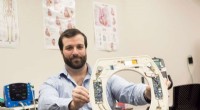
*A new portable device could help doctors quickly and easily test how squishy cancerous tumors are, which could lead to better treatment decisions.*
The device, called the Elastometer, is about the size of a credit card and uses a small amount of pressure to measure the stiffness of tissue. This information can help doctors determine if a tumor is malignant or benign, and whether it is likely to spread.
The Elastometer is still in the early stages of development, but researchers hope that it will eventually be used in clinics and hospitals to help patients receive the best possible care.
How does the Elastometer work?
The Elastometer works by measuring the amount of force required to deform a small area of tissue. This force is then converted into a stiffness value, which is displayed on the device's screen.
The stiffness of tissue can vary depending on a number of factors, including the type of tissue, the presence of disease, and the amount of inflammation. In general, cancerous tumors are stiffer than healthy tissue, and benign tumors are softer than healthy tissue.
What are the benefits of the Elastometer?
The Elastometer has a number of potential benefits, including:
* It is a quick and easy way to test the stiffness of tissue.
* It is non-invasive, so it does not require any needles or surgery.
* It is portable, so it can be used in clinics and hospitals, as well as in remote areas.
* It is relatively inexpensive, so it could be made available to a wide range of patients.
What are the challenges of the Elastometer?
The Elastometer is still in the early stages of development, and there are a number of challenges that need to be overcome before it can be widely used in clinical practice.
One challenge is that the Elastometer can be difficult to use on some types of tissue, such as tissue that is very thin or very thick. Another challenge is that the Elastometer can be affected by the amount of pressure that is applied to the tissue.
Researchers are working to overcome these challenges and improve the accuracy and reliability of the Elastometer.
Conclusion
The Elastometer is a promising new device that could help doctors quickly and easily test the stiffness of cancerous tumors. This information could lead to better treatment decisions and improved patient outcomes.