By Josh Fredman, Updated Mar 24, 2022
SEAN GLADWELL/Moment/GettyImages
Humidity, the amount of water vapor in the air, is a key variable in meteorology. While several types exist, everyday discussions typically refer to relative humidity—the ratio of the current water‑vapor pressure to the maximum possible at a given temperature, expressed as a percentage. When relative humidity reaches 100 %, water vapor begins to condense, often resulting in precipitation.
Understanding relative humidity is crucial. Low levels can cause dry skin and irritation, while high levels make hot days feel swelteringly hot and cold days feel colder. In indoor environments, elevated humidity fosters mold growth; conversely, very dry air can accelerate the spread of respiratory viruses. For engineers and technicians, precise humidity measurements protect sensitive electronics and influence material stability.
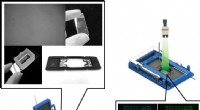
One of the most accurate modern instruments is the cooled‑mirror dew‑point hygrometer. A chilled mirror causes water vapor to condense on its surface. As relative humidity rises, more droplets form, distorting the mirror’s optical clarity. An integrated sensor quantifies this distortion, providing real‑time dew‑point data. These devices require specialized fabrication and calibration but offer unmatched precision for research and industrial applications.
Leonardo da Vinci’s 16th‑century invention used a wool ball whose weight varied with moisture. Though ingenious, the design lacked the sensitivity needed for accurate relative‑humidity readings.
In the 19th century, Horace Bénédict de Saussure introduced the hair hygrometer, leveraging the natural expansion of animal or human hair in humid air. When tensioned, the hair’s slight length changes can be measured, allowing practitioners to gauge relative humidity with modest precision—a technique still employed in some field settings.
Perhaps the most widely used field hygrometer is the psychrometer, which pairs a dry thermometer with a wet‑tipped one. Evaporation from the wet tip cools it, creating a temperature differential relative to the dry bulb. By comparing these two readings against a calibrated psychrometric chart, technicians derive the relative humidity. Accurate use demands meticulous calibration and periodic recalibration to account for sensor drift.