By Karen G. Blaettler – Updated March 24, 2022
Pure water never exists in nature. Even in controlled environments, its purity deteriorates as soon as it is opened. Water’s ability to dissolve a wide range of substances is crucial for life, and the dissolved chemicals determine key physical conditions in ecosystems. Two interrelated water quality parameters are acidity and alkalinity.
Alkalinity is the water’s capacity to resist pH changes, particularly the shift toward acidity. A higher alkalinity means greater buffering capacity, protecting aquatic life that thrives within narrow pH ranges. Alkalinity also influences wastewater treatment, irrigation suitability, and domestic water systems, where it can contribute to scale buildup and affect soap lathering.
Alkalinity is commonly expressed as calcium carbonate (CaCO₃) concentration, reported in parts per million (ppm) or milligrams per liter (mg/L). The conversion factor is 1 ppm = 1 mg/L.
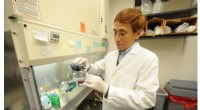
Use a 50 mL aliquot for typical alkalinity ranges; for low‑alkalinity waters, a 100 mL sample improves accuracy. Filter the water through a 0.45‑µm membrane to remove suspended solids. Keep the sample at its original temperature and protect it from light and contaminants. Verify the sulfuric acid solution (commonly 0.01639 N) against a sodium carbonate standard before titration.
The preferred technique is inflection‑point titration (IPT) with a glass burette or a calibrated digital titrator. Perform the titration carefully around pH 8.3 and the equivalence point near pH 4.5. Clean, dry equipment is essential to avoid dilution of the acid.
B – Volume of acid used (mL)Ca – Acid concentration (meq/mL). For 0.01639 N sulfuric acid, Ca = 0.01639.Vs – Sample volume (mL)CF – Correction factor. Use 1.01 for Hach digital titrator cartridges; otherwise 1.0.Alk(meq/L) = (1000 × B × Ca × CF) ÷ Vs
Alk(mg/L CaCO₃) = (50044 × B × Ca × CF) ÷ Vs
Assume a titration used 12 mL of 0.01639 meq/mL sulfuric acid on a 50 mL water sample with a standard burette (CF = 1.0).
Alkalinity values are expressed in mg/L, which is equivalent to ppm. General guidelines: