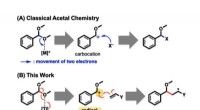
1. Breaking of Bonds:
- The existing bonds in the reactant molecules are broken. This requires energy input, often in the form of heat or light.
2. Rearrangement of Atoms:
- The atoms that were previously bonded together rearrange themselves. This involves the formation of new bonds between different atoms.
3. Formation of New Bonds:
- New chemical bonds are formed between the rearranged atoms, creating the new compound. This process often releases energy, making the reaction exothermic.
4. Change in Properties:
- The new compound will have different physical and chemical properties compared to the original reactants. For example, the color, odor, melting point, and reactivity will likely be different.
Here's a simple analogy: Imagine building a Lego structure.
- You start with individual Lego bricks (atoms).
- You break apart existing structures (break bonds).
- You rearrange the bricks (rearrange atoms).
- You connect the bricks in new ways (form new bonds).
- You end up with a completely different structure (new compound) with its own unique characteristics.
Some Key Points:
- Chemical reactions involve the rearrangement of atoms, not the creation or destruction of atoms.
- The number of atoms of each element remains the same before and after the reaction.
- Chemical reactions can be represented by chemical equations that show the reactants and products involved.
Let me know if you'd like to know more about specific types of chemical reactions!