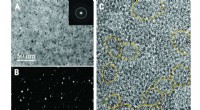
1. Solid
* Arrangement: Molecules are tightly packed in a highly ordered, rigid structure, often forming a crystal lattice.
* Key Properties:
* Fixed Shape: The rigid structure prevents the solid from changing shape easily.
* Fixed Volume: The tightly packed molecules resist compression.
* High Density: The close spacing of molecules results in a high density.
* Low Diffusion: The molecules are bound in place, limiting their movement and diffusion.
* Vibrational Motion: Molecules in solids primarily vibrate around fixed positions.
Example: Ice, salt, diamonds
2. Liquid
* Arrangement: Molecules are close together but less ordered than in a solid. They can slide past each other, leading to fluidity.
* Key Properties:
* Variable Shape: Liquids take the shape of their container.
* Fixed Volume: Liquids are relatively incompressible.
* High Density: Liquids are denser than gases.
* Moderate Diffusion: Molecules can move and diffuse more readily than in solids.
* Translational Motion: Molecules in liquids exhibit translational, vibrational, and rotational motion.
Example: Water, oil, mercury
3. Gas
* Arrangement: Molecules are widely spaced and have no fixed arrangement. They move randomly and independently.
* Key Properties:
* Variable Shape: Gases fill their container completely.
* Variable Volume: Gases are easily compressed.
* Low Density: The large spacing between molecules results in low density.
* High Diffusion: Molecules can move freely and diffuse rapidly.
* Translational Motion: Molecules in gases exhibit translational, vibrational, and rotational motion, with translational motion being dominant.
Example: Air, oxygen, helium
4. Plasma
* Arrangement: A plasma is often described as an ionized gas, where a significant portion of the atoms have lost or gained electrons, creating free ions and electrons. It's not about the specific arrangement of the molecules, but rather the presence of charged particles.
* Key Properties:
* Variable Shape: Plasmas can be confined by magnetic fields.
* Variable Volume: Plasmas can be compressed and expanded.
* High Conductivity: The presence of free charges makes plasmas highly conductive.
* Emits Light: Plasmas often emit light due to excited electrons recombining with ions.
* Strongly Affected by Magnetic Fields: The movement of charged particles is greatly influenced by magnetic fields.
Example: Lightning, fluorescent lights, the Sun's atmosphere
Important Note: These descriptions are simplified models. The actual behavior of molecules is more complex, with factors like intermolecular forces and temperature playing significant roles.