* Molecular Solids: These solids are held together by weak intermolecular forces (like hydrogen bonding, dipole-dipole interactions, or London dispersion forces).
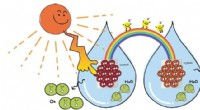
* Water's Polarity: Water is a highly polar molecule, meaning it has a positive and negative end. This polarity allows it to interact with and disrupt the weak forces holding the molecular solid together.
* Dissolving Process: When a molecular solid is placed in water, the polar water molecules surround the solute molecules. The attractive forces between the water molecules and the solute molecules are stronger than the intermolecular forces within the solid. This causes the solute molecules to break apart and become surrounded by water molecules, forming a solution.
Important Note: Some molecular solids are not very soluble in water. This might occur if the intermolecular forces within the solid are very strong or if the solute molecule is non-polar and cannot interact well with water.