Here's why:
* Nickel(II) ion (Ni²⁺) in aqueous solution is typically green.
* Ammonia (NH₃) is a strong-field ligand, meaning it causes a large splitting of the d-orbitals in the nickel ion.
* This large splitting results in a low spin configuration for the d-electrons.
* In the low spin configuration, the electronic transitions responsible for color absorption occur at higher energies, leading to the absorption of violet and blue light and the transmission of yellow light.
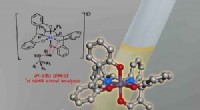
Therefore, the complex ion [Ni(NH₃)₆]²⁺ appears yellow.