* Metals tend to lose electrons, forming positively charged ions called cations.
* Nonmetals tend to gain electrons, forming negatively charged ions called anions.
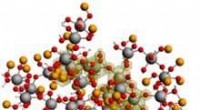
The electrostatic attraction between these oppositely charged ions is what creates the ionic bond.
Here's a simple way to remember it:
* Metals form Cations (positive)
* Nonmetals form Anions (negative)
* Cations and Anions attract, forming an ionic bond.
Examples of Ionic Compounds:
* Sodium Chloride (NaCl) - Sodium (metal) loses an electron to Chlorine (nonmetal)
* Magnesium Oxide (MgO) - Magnesium (metal) loses two electrons to Oxygen (nonmetal)
* Potassium Fluoride (KF) - Potassium (metal) loses an electron to Fluorine (nonmetal)
Let me know if you'd like more examples or want to explore specific cases!