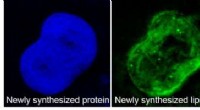
Here's why they are so useful:
* Tracing pathways: Radiotracers act like tiny, detectable tags. They allow scientists to follow the movement of atoms and molecules within a system. This is especially helpful for understanding complex reactions or processes where traditional methods are limited.
* Quantifying reactions: The radioactivity of the tracer can be measured to determine the amount of a specific substance present. This is important for studying reaction rates, yields, and efficiency.
* Diagnosing problems: Radiotracers can be used to identify leaks, blockages, or other issues in industrial processes, leading to improved efficiency and safety.
* Medical applications: Radiotracers are widely used in medical imaging (like PET scans) to diagnose and monitor various conditions.
Examples of radiotracers:
* Carbon-14: Used to study photosynthesis and metabolic pathways.
* Phosphorus-32: Used to study DNA replication and protein synthesis.
* Iodine-131: Used to diagnose and treat thyroid conditions.
Let me know if you'd like to delve deeper into a specific radiotracer or its application!