Melting
* Process: Solid to liquid
* Particle Behavior:
* Particles in a solid are tightly packed and vibrate in fixed positions.
* As heat is added, the vibrations increase.
* Eventually, the vibrations become strong enough to overcome the forces holding the particles in a rigid structure.
* The particles gain enough energy to break free from their fixed positions and move around more freely.
* This transition from fixed to free movement is what defines the change from solid to liquid.
Freezing
* Process: Liquid to solid
* Particle Behavior:
* Particles in a liquid are more loosely packed and can move around.
* As heat is removed, the particles slow down and their vibrations decrease.
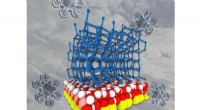
* When the particles lose enough energy, they settle into a more organized, fixed structure.
* The forces of attraction between the particles become stronger, holding them in a rigid lattice.
* This transition from free movement to fixed positions is what defines the change from liquid to solid.
Key Differences:
* Energy Flow: Melting requires heat energy to be absorbed, while freezing releases heat energy.
* Particle Motion: Particles become more mobile during melting and less mobile during freezing.
* Structure: A solid has a more organized, fixed structure, while a liquid has a more disordered and fluid structure.
Think of it like this:
* Melting: Like people at a concert, initially standing still (solid). As the music gets louder (heat), they start dancing and moving around (liquid).
* Freezing: Like dancers slowing down and stopping their movements (liquid). They eventually return to standing still in a specific formation (solid).