1. The Bohr Model: This is a simplified model of an atom. It shows a central nucleus (containing protons and neutrons) surrounded by electrons in specific energy levels called shells. For oxygen:
* Nucleus: Contains 8 protons and 8 neutrons.
* Electrons: 2 electrons in the first shell, and 6 electrons in the second shell.
2. Lewis Dot Structure: This shows the valence electrons (the electrons in the outermost shell) as dots around the atomic symbol. For oxygen:
* Symbol: O
* Dots: ..
O ..
3. Quantum Mechanical Model: This is the most accurate model, but it's also the most complex. It uses probability to describe where electrons are likely to be found, rather than showing specific orbits. It's represented by complex equations and shapes.
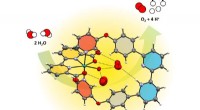
4. 3D Molecular Model: While you can't see an oxygen atom, you can see representations of them in 3D models. These models show the spatial arrangement of atoms in a molecule, and they can be helpful for understanding chemical bonds and interactions.
So, what does an oxygen atom look like?
The answer depends on how you're visualizing it. It's a tiny, complex structure that we can only represent through models. The Bohr model is a good starting point for understanding the basic structure, while the Lewis dot structure is helpful for understanding how oxygen interacts with other atoms.