1. Proton (H+) Donation:
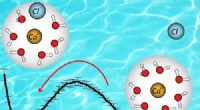
* HCl readily dissociates in water, releasing a hydrogen ion (H+) and a chloride ion (Cl-):
* HCl (aq) → H+ (aq) + Cl- (aq)
* The ability to donate a proton (H+) is the defining characteristic of an acid, as per the Brønsted-Lowry acid-base theory.
2. pH:
* Aqueous solutions of HCl have a pH less than 7, indicating their acidic nature. The lower the pH, the stronger the acid.
3. Reaction with Bases:
* HCl reacts with bases (like NaOH) to form salt (NaCl) and water (H2O):
* HCl (aq) + NaOH (aq) → NaCl (aq) + H2O (l)
* This neutralization reaction is a characteristic of acids.
4. Presence of Hydrogen Ion:
* The presence of a hydrogen ion (H+) in its structure, which can readily dissociate, contributes to HCl's acidic nature.
5. Electron Acceptor:
* According to the Lewis acid-base theory, an acid is an electron acceptor. HCl can accept an electron pair, making it an acid.
In summary, HCl's ability to donate protons, its low pH, its reaction with bases, and the presence of a hydrogen ion in its structure all contribute to its classification as an acid.